
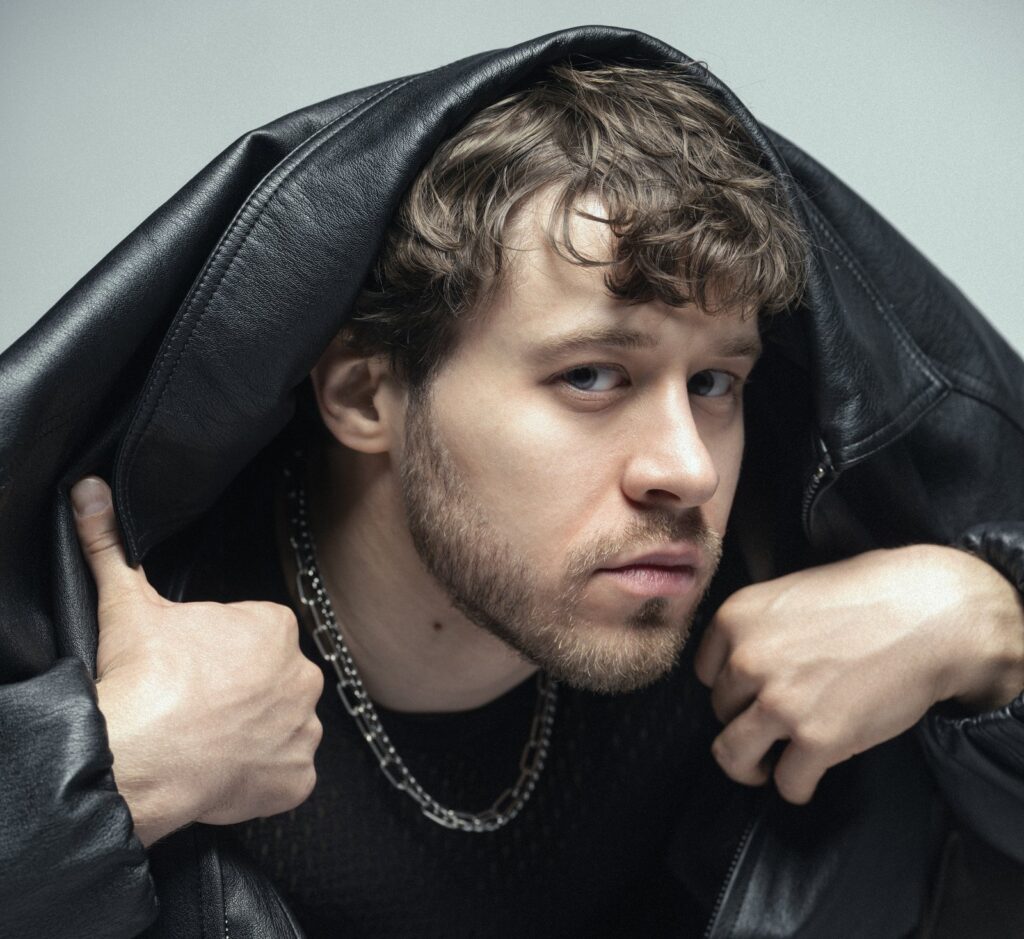

Dmytro Shcherbakov, professionally known as Asphalt Tattoo, is featured in the November 2026 issue of Ink Legends Magazine. A Ukrainian-born tattoo artist with ten years of experience, he worked in Kyiv, across Europe and in Chicago, and today works at Rebels & Rustlers in Mechelen, Belgium, while continuing to travel and work internationally.
Dmytro specializes in graphic tattooing and neo-tribal, creating contemporary experimental compositions at the intersection of realism, abstraction, ornamental art and neo-tribal. He has served as a judge at tattoo conventions, teaches masterclasses and webinars, and is the author of Skin Not Paper: The Modern Tattoo Guide, an educational book for tattoo artists.
Read our exclusive interview with Dmytro below.
Can you please start by introducing yourself and telling us about your journey as a tattoo artist?
My name is Dmytro Shcherbakov, but I’m professionally known as Asphalt Tattoo. I’m a Ukrainian-born tattoo artist with ten years of experience, specialising in graphic tattooing and neo-tribal.
Art has always been a big part of my life, especially drawing. I initially studied Interior and Furniture Design in Kyiv, then continued my studies in architecture in Warsaw, where I first started experimenting with tattooing. What began as a new artistic direction gradually became my profession.
I worked in Kyiv until 2022, then spent several years working across Europe before moving to the United States, where I lived and worked in Chicago for two years. Today, I continue to travel and work internationally, constantly exploring new ideas and developing my artistic style. Alongside tattooing, I’m also the author of Skin Not Paper: The Modern Tattoo Guide, an educational book for tattoo artists.
For me, tattooing is about more than creating an image on the skin. It’s about understanding the body, finding the right composition, and turning an idea into something personal and lasting.
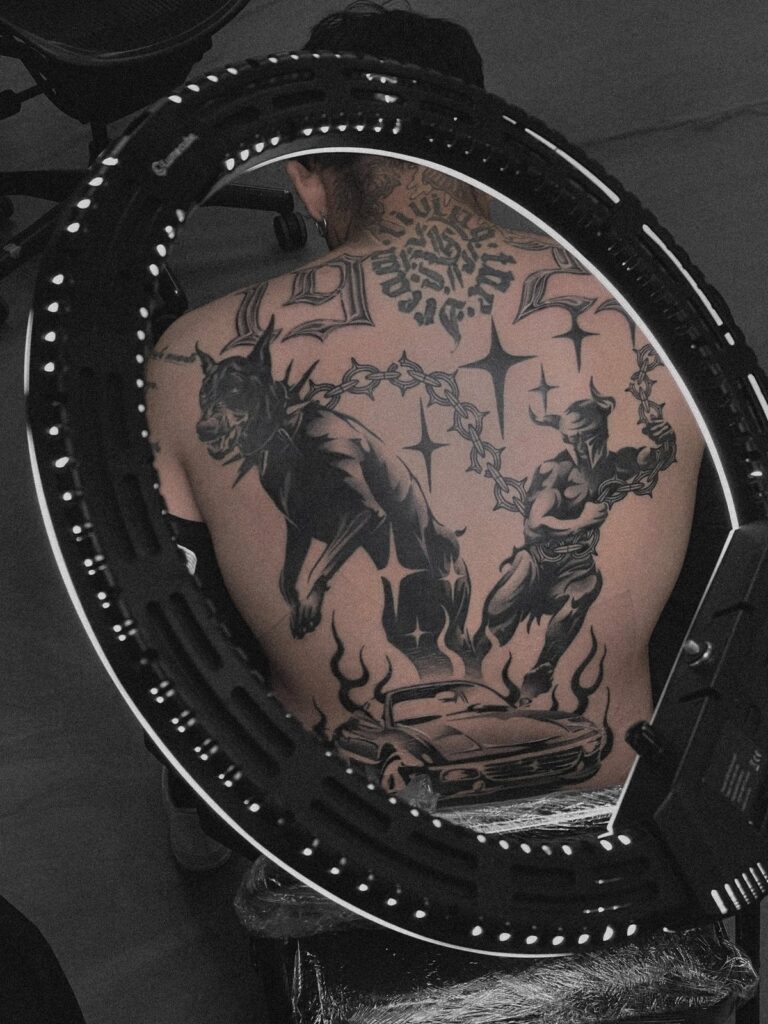
You have a distinctive graphic style. How would you describe it, and what drew you to it?
Thank you! I would describe my style as contemporary experimental graphic tattooing, somewhere at the intersection of realism, abstraction, ornamental art, and neo-tribal. I combine classical aesthetics with experimental forms, focusing on architectural composition, the contrast between realism and abstraction, negative space, and organic movement. I’m interested in reinterpreting traditional imagery through a contemporary graphic language, creating compositions where ornament, structure, and movement work together as a whole.
What attracts me most to this direction is the balance between discipline and chaos. I love combining classical forms with modern abstraction, complex textures with clean lines, and familiar visual elements with something unexpected. I enjoy taking inspiration from traditional aesthetics and transforming them into something that feels entirely new and contemporary. For me, it’s about respecting the foundations of art while constantly experimenting and finding my own way of expressing them.
What inspires your designs, and how do you approach the design process?
My clients and their ideas are always one of my main sources of inspiration. I’m also drawn to the reinterpretation of existing forms and the search for new aesthetics through unexpected combinations. Classical art and sculpture, architecture, Japanese aesthetics, organic forms found in nature, and contemporary graphic design all influence my work.
I’m often less interested in telling a literal story through an image than in creating a new visual form that evokes an emotion on its own. For me, aesthetics, movement, and composition can be just as powerful as the meaning behind an image.
My design process always begins with the specific project and the client’s vision. I try to understand what they want to express, and from there, I develop my own approach to translating that idea into a design. Since a tattoo will ultimately become part of the body, I believe the anatomy should be considered from the very beginning. I usually start by working directly with an image of the area to be tattooed, developing the composition around the body’s natural contours rather than designing something first and trying to fit it onto the skin later.
Once the concept and composition come together, the process becomes more intuitive. I experiment with shapes, proportions, and details until everything feels balanced and works as a unified whole.

You’ve served as a judge at conventions. When you evaluate competition pieces, what do you look for in a winning tattoo?
When judging a tattoo, I look at both the technical execution and the artistic vision behind it. Composition and placement on the body are essential, as well as the balance of tones and colours, clarity, saturation, and overall quality of the application. I pay attention to the artist’s control, how gently the skin has been worked, and whether the tattoo shows signs of unnecessary trauma. It’s also important to consider the client’s skin tone, skin condition, and age, as well as how the tattoo is likely to heal and age over time.
Beyond these fundamentals, I’m drawn to tattoos that stand out within their category. Originality, innovation, a strong individual identity, and an interesting artistic approach matter a lot to me. I appreciate work that avoids clichés and brings something genuinely distinctive to the table.
And, for me, size doesn’t determine quality. I would always rank a smaller, exceptionally well-executed tattoo above a larger piece that doesn’t demonstrate the same level of skill or artistic thought. More ink doesn’t automatically mean a better tattoo. What matters is how successfully the artist brings the idea to life, both technically and creatively.

You’ve also held a masterclass. What led you to start teaching, and what do you enjoy most about helping other artists grow?
When I first started tattooing, finding reliable information was a real challenge. I had to gather knowledge piece by piece, learn from more experienced artists, search the internet, and, of course, make plenty of mistakes along the way. That experience made me realise how important it is to have clear, well-structured information when you’re just starting out.
Today, there’s a huge amount of information available, but knowing how to organise it and understand the fundamentals is just as important. Through my webinars and masterclasses, I want to help beginners build a solid foundation, understand the basics of tattooing, and find a clearer direction for their development.
I’ve also had the opportunity to teach more experienced artists, which I find equally valuable. No matter how many years you’ve been tattooing, there’s always something new to learn from others. We all have different approaches, and even a small detail can change the way you work.
This was also one of the reasons I wrote Skin Not Paper: The Modern Tattoo Guide. I wanted to create something artists could keep close at hand, with practical advice and useful knowledge in one place, making the learning process a little easier. For me, teaching is about sharing what I’ve learned and helping others avoid some of the difficulties I had to figure out on my own.
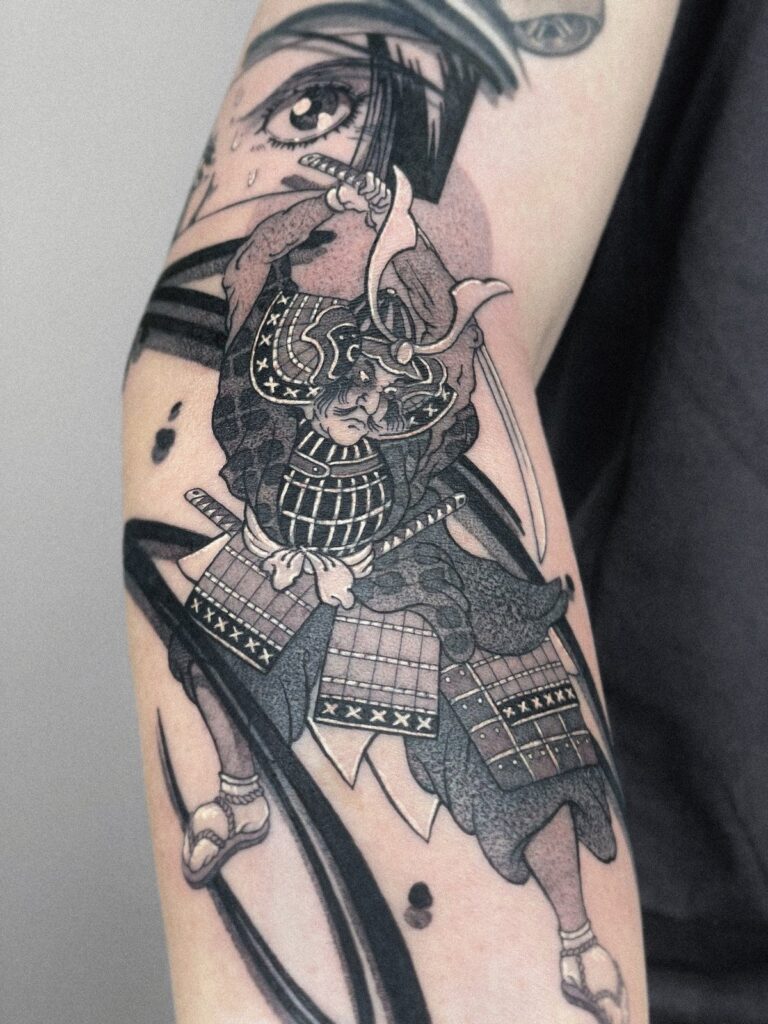
What do you enjoy most about being a tattoo artist, and what still challenges you the most today?
What I enjoy most is seeing my clients’ reactions when they see the finished tattoo. Knowing that I’ve created something they genuinely love is incredibly rewarding. I also love the freedom this profession gives me: the opportunity to work in different countries, meet wonderful people, discover new cultures, and express myself creatively. I can experiment, explore my ideas, and create something that brings joy to someone else.
One of the biggest challenges today is the situation in the world, especially the war in my home country, Ukraine. It’s impossible not to be affected by it, and it inevitably influences me on a personal level. Still, I try to keep moving forward and continue doing what I love.
Creatively, I think the biggest challenge is the constant competition with myself. In an era of AI and endless content online, I sometimes question the value of my own work and how to keep my ideas relevant and contemporary. I believe it’s important not to get lost in the noise, but to keep developing my own artistic language, experimenting, and creating work that genuinely reflects who I am.
Do you have any special or exciting plans in the near future?
I always want to keep growing, refining my skills, and finding new ways to express myself artistically. I don’t want to stand still creatively, so I’m constantly exploring new ideas and looking for ways to push my work further.
One of my biggest dreams is to open my own tattoo studio, bringing together some of the best artists and creating an environment where creativity and knowledge can grow. I’d also love to share my experience with the next generation of tattoo artists, helping them develop their skills, find their own artistic voices, and build their paths in the industry. It’s something I would really love to bring to life in the future.

What are your hobbies and interests outside of tattooing?
Outside of tattooing, I’m really interested in self-development. I enjoy learning languages, reading, going to the gym, and constantly improving my artistic skills. Drawing is still a big part of my life, and I also like exploring new software and AI tools that can expand my creative possibilities.
I also value spending time with the people close to me, even though my schedule doesn’t always leave me much time for it. I enjoy hiking, board games, watching movies, and travelling together. I’m always open to trying something new, too. I think new experiences are important because they help me see things from different perspectives and often inspire me creatively.


Author: Lenka Banyarova, published on October 28th.