

Lamia Karahanlı is on the cover of the October 2026 issue of Ink Legends Magazine. Trained at Cleopatra Ink Tattoo Academy in Istanbul, she went on to work in Manhattan, New York, and today tattoos at Cleopatra Ink in St. Petersburg, Florida.
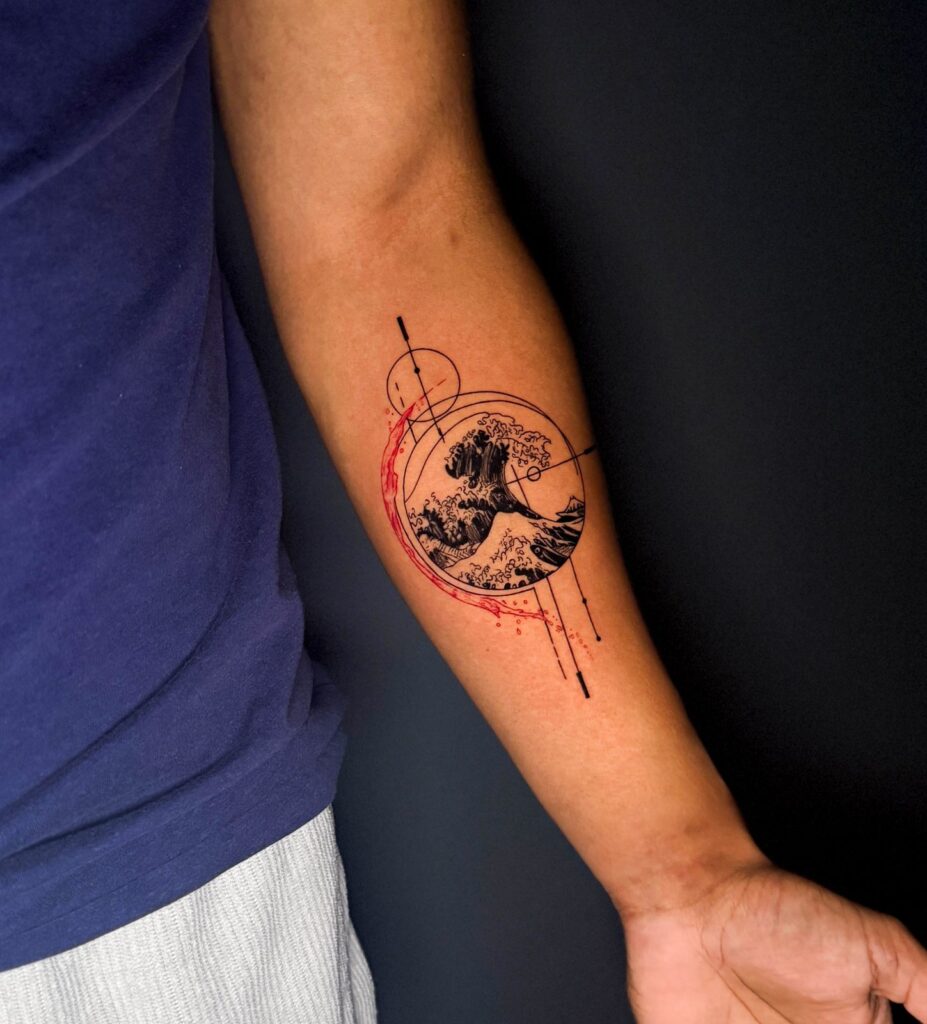
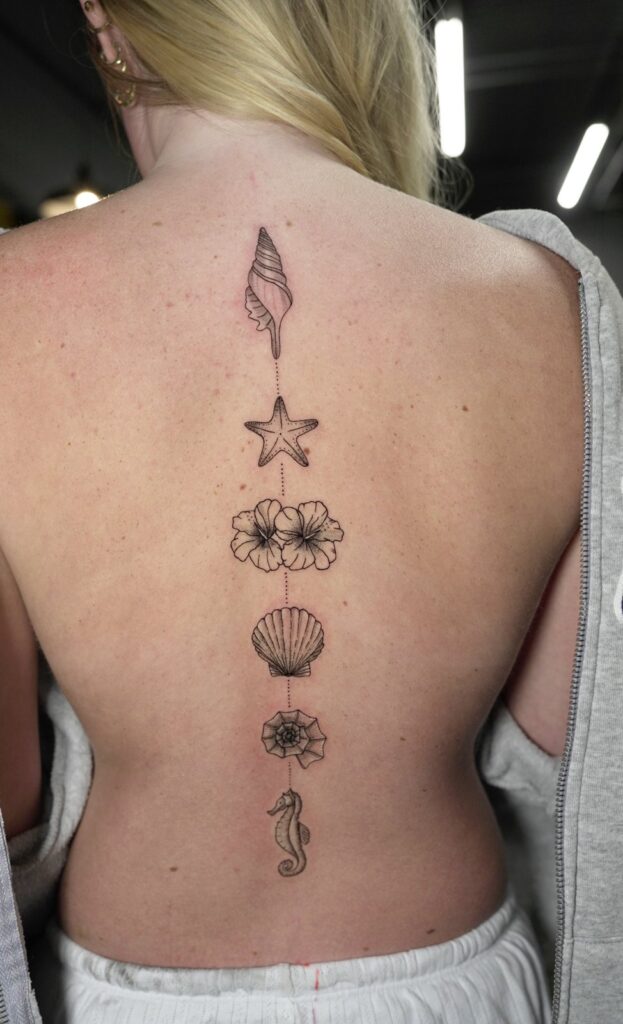
Lamia specializes in Fine Line, Micro Realism, linework and color tattoos, with a passion for creating maximum visual impact on a small scale. Her precision and clean, elegant style earned her an award in the Micro Tattoo category at the Palm Beach Tattoo & Oddities Expo, and her work has appeared in international tattoo publications.
Read our exclusive interview with Lamia below.
Can you please start by introducing yourself and telling us about your journey as a tattoo artist?
My name is Lamia Karahanlı, and I am a tattoo artist currently based in St. Petersburg, Florida. My professional tattoo journey began in 2023, when I started my education at Cleopatra Ink Tattoo Academy in Istanbul. During my time at the academy, I received comprehensive training covering everything from the fundamentals of tattoo application and design to hygiene, technical knowledge, and machine use. That experience gave me a very strong foundation.
Once I completed my training and began working professionally, I quickly realized how much of an advantage that education gave me in real studio situations — from communicating with clients and preparing designs to making the right technical decisions and managing the tattoo process. At the same time, I understood very early that tattooing is an industry that never stops evolving, so I never wanted my first education to be the end of my learning. Throughout my career, I have continued setting new goals for myself and investing in further education.
After working professionally in Istanbul, my career brought me to the United States. I had the opportunity to work in Manhattan, New York, and today I continue my career at Cleopatra Ink in St. Petersburg, Florida. Along the way, I have completed advanced training through internationally recognized education platforms such as Cleopatra Ink Academy and 10 Masters, working extensively on realism, drawing, composition, shading, light and shadow, stencil preparation, and a variety of technical applications.
I have built my career around constant growth. Today, I work professionally in the United States, my work has appeared in international tattoo publications, I have received awards at tattoo competitions, and I continue pushing myself both technically and artistically. For me, tattooing has become much more than the profession I started with — it has become a career that I am constantly building and expanding.
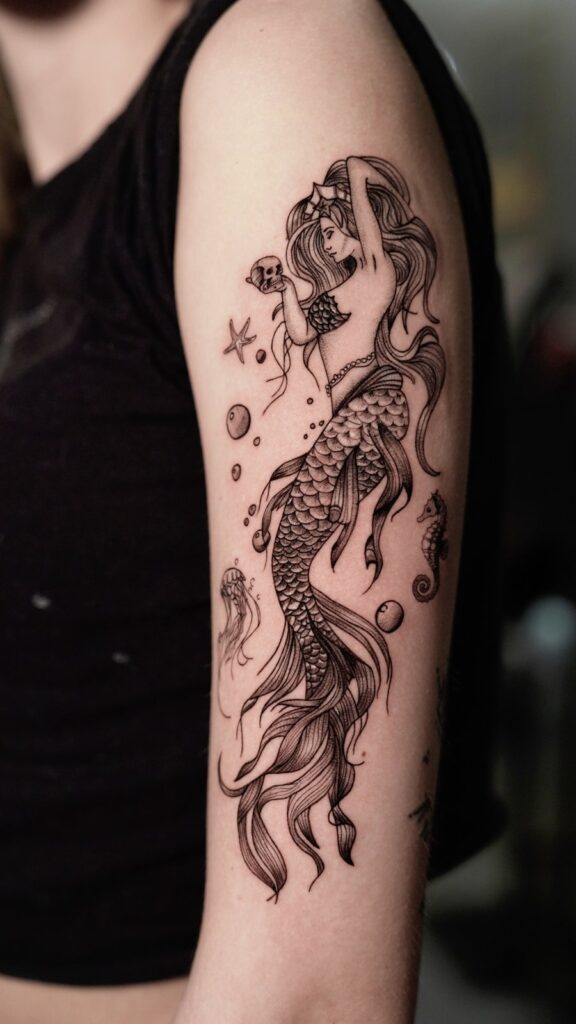
You specialize in Micro Realism and Fine Line. How would you describe your style, and what drew you to it?
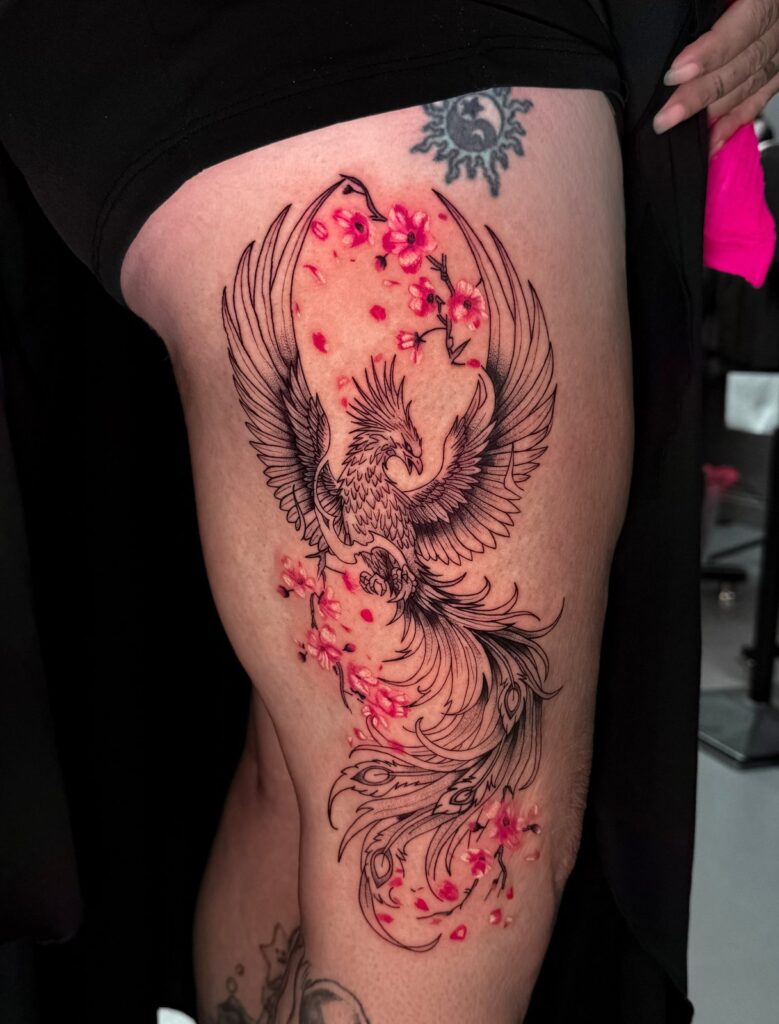
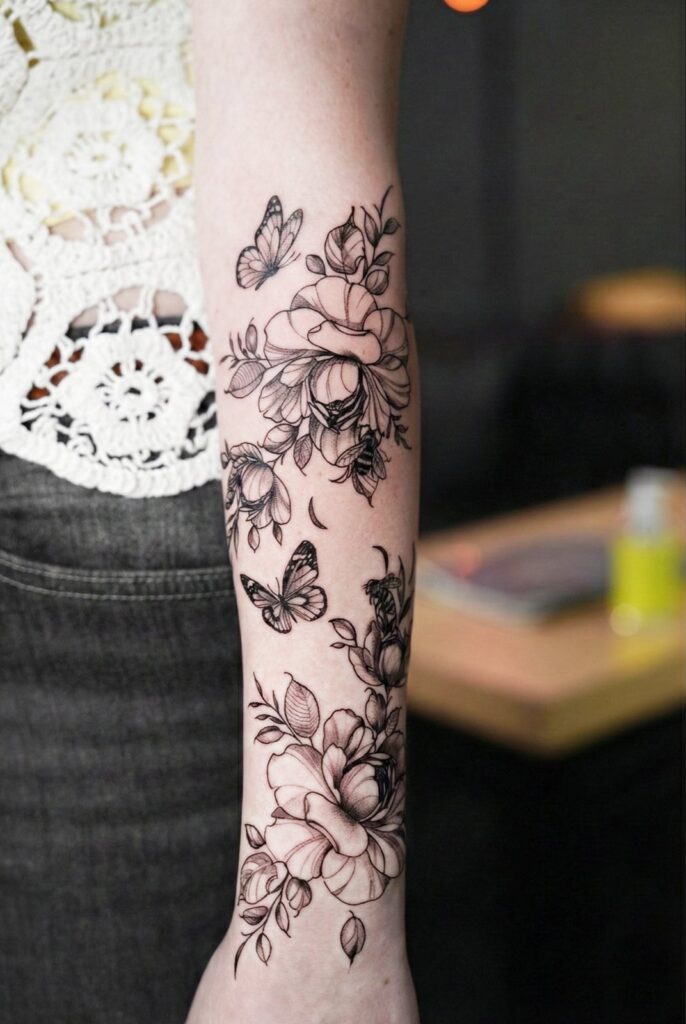
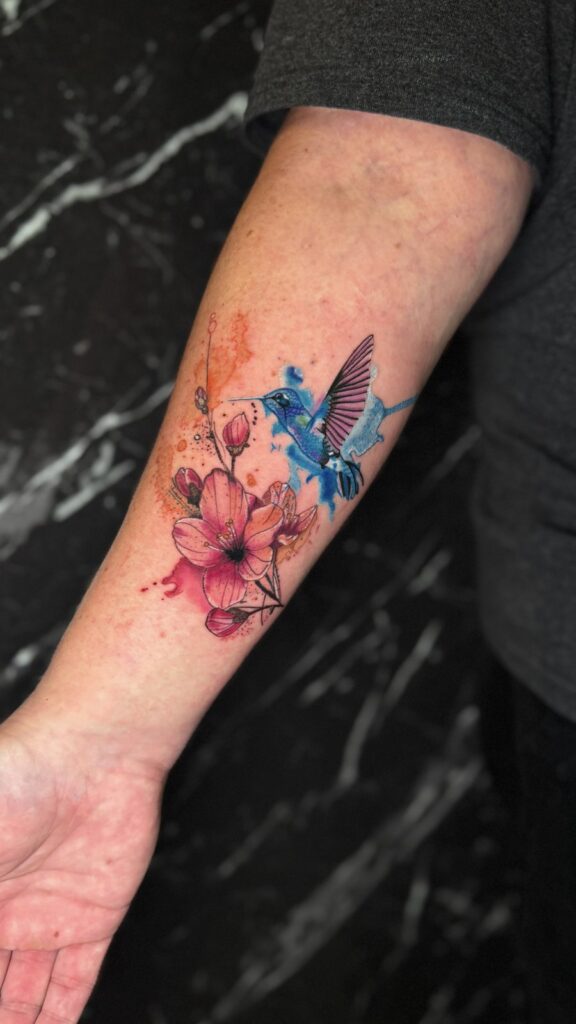
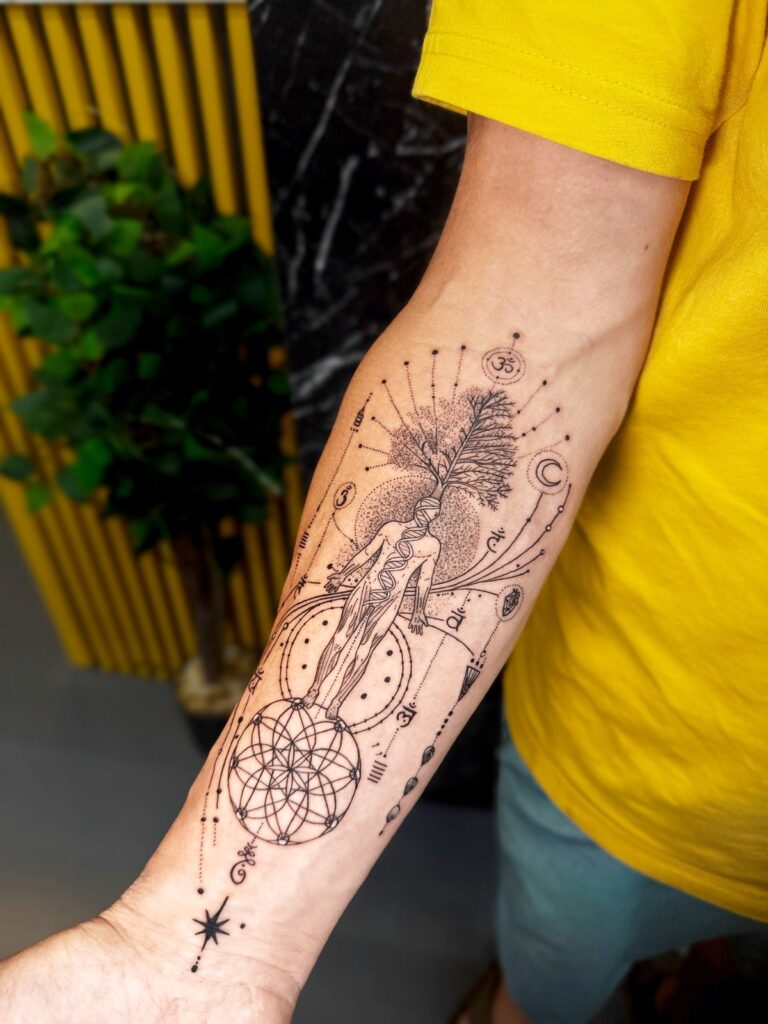
I would describe my style as clean, elegant, detailed, and controlled. I especially enjoy working in Fine Line, Micro Tattoo, Micro Realism, Linework, and Color Tattoo, and I have always been fascinated by the idea of creating a strong visual impact within a small-scale design. I genuinely enjoy working with detail — creating the right proportions, lines, contrast, and character within a small design is much more technical than it may initially appear.
For me, Fine Line is all about precision and control. When you work with very fine lines, every movement becomes visible in the final result, so it requires a high level of hand control and technical discipline. Micro Realism, on the other hand, is about creating the strongest possible sense of realism within a very limited space, where depth, light, shadow, and contrast all have to work together correctly. That is exactly what attracted me to these styles: the challenge of creating maximum impact on a small scale.
I also really enjoy Color Tattoo work. Using color gives me the opportunity to introduce a completely different energy and personality into a design.
Fine Line and Micro Realism tattoos often carry deep personal meaning for clients. How do you translate their ideas into a design that feels true to their story while still working as a strong tattoo?
When I begin working with a client, I first try to understand not only what they want visually, but also what the design means to them. Some clients come in with a very clear idea; others begin with a memory, a person, a symbol, or a feeling. Once I understand that, my job is to translate it into a design that is visually strong, clean, and technically suitable for tattooing.
For me, the goal is not to place every part of someone’s story into one design — it is about identifying the strongest element of that story and giving it the right visual focus. Sometimes the best way to create a powerful tattoo is not to add more detail, but to remove what is unnecessary. From there, I evaluate the anatomy: placement, size, body movement, negative space, and how the tattoo will look over time are all extremely important to me. The final piece should represent the client’s story, but it should also stand on its own as a strong and aesthetically balanced tattoo — and that balance is one of the things I enjoy most about the design process.
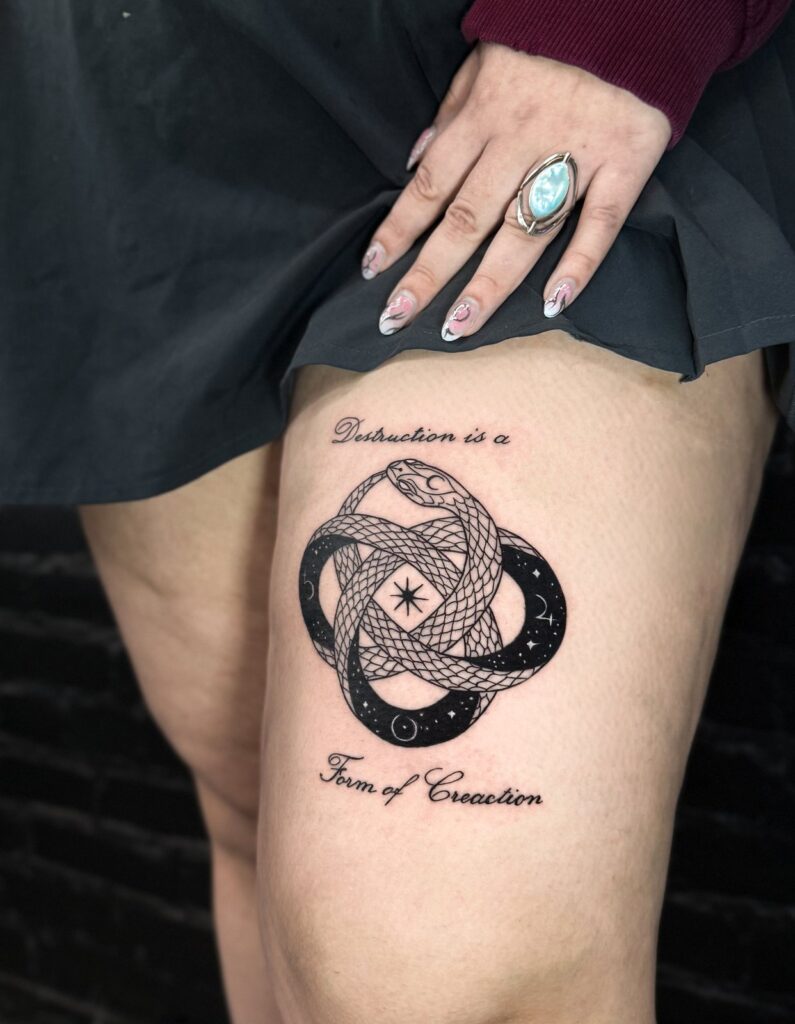
Your ability to capture such realistic detail on a small scale is incredible. How did you develop the skills to achieve this level of precision?
It comes from a combination of extensive education, consistent practice, technical discipline, and developing a very strong sense of control over detail. When working on a small scale, the margin for error becomes much smaller, so your hand control, understanding of equipment, and visual judgment all need to be highly developed. During my advanced training, I worked intensively on skull studies, anatomy, tonal values, light and shadow, texture, animal anatomy, and stencil preparation — and I did not take these courses just to complete them. I brought the techniques I learned into my own work and applied them repeatedly until they became part of my process.
Precision in tattooing is also directly connected to how well you understand your equipment. Needle selection, machine settings, voltage, hand speed, skin tension, depth, and the way pigment is placed into the skin can all directly affect the quality of the final result.
Micro work taught me something especially important: more detail does not always mean a better tattoo. Sometimes true skill is knowing which details are necessary and which ones would weaken the overall design. For me, precision is not simply about creating a very small line — it means making every decision within a small space deliberately and with control.
What inspires your designs, and how do you approach the design process?
My inspiration can come from many different places — nature, human emotions, mythology, architecture, photography, symbolism, travel, and the personal stories of my clients all influence my work. When I begin a design, I first establish the emotion and visual direction the client wants, and from there I build the composition and determine where the strongest focal point should be.
When I create a design, I am not simply trying to make a beautiful drawing. I think about how it will sit on the body, which angle will make it look strongest, how it will follow the anatomy, and how it can maintain its visual impact over time. Composition is extremely important to me: where the eye goes first, where the main detail sits, how negative space is used, and how the different elements interact with one another all determine the strength of the final piece. My goal is not to fit as much as possible into a tattoo — it is to create something that feels complete and powerful the moment you look at it.
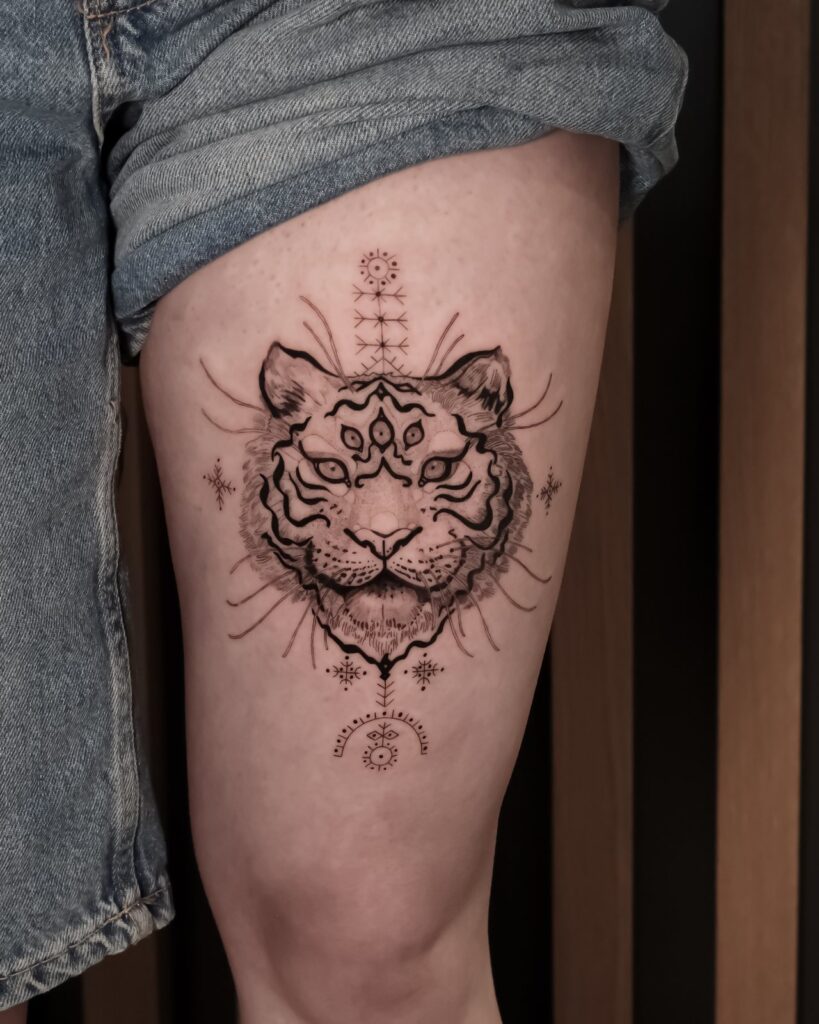
You’ve won awards for your work. What do these moments mean to you, and how have they influenced your growth as an artist?
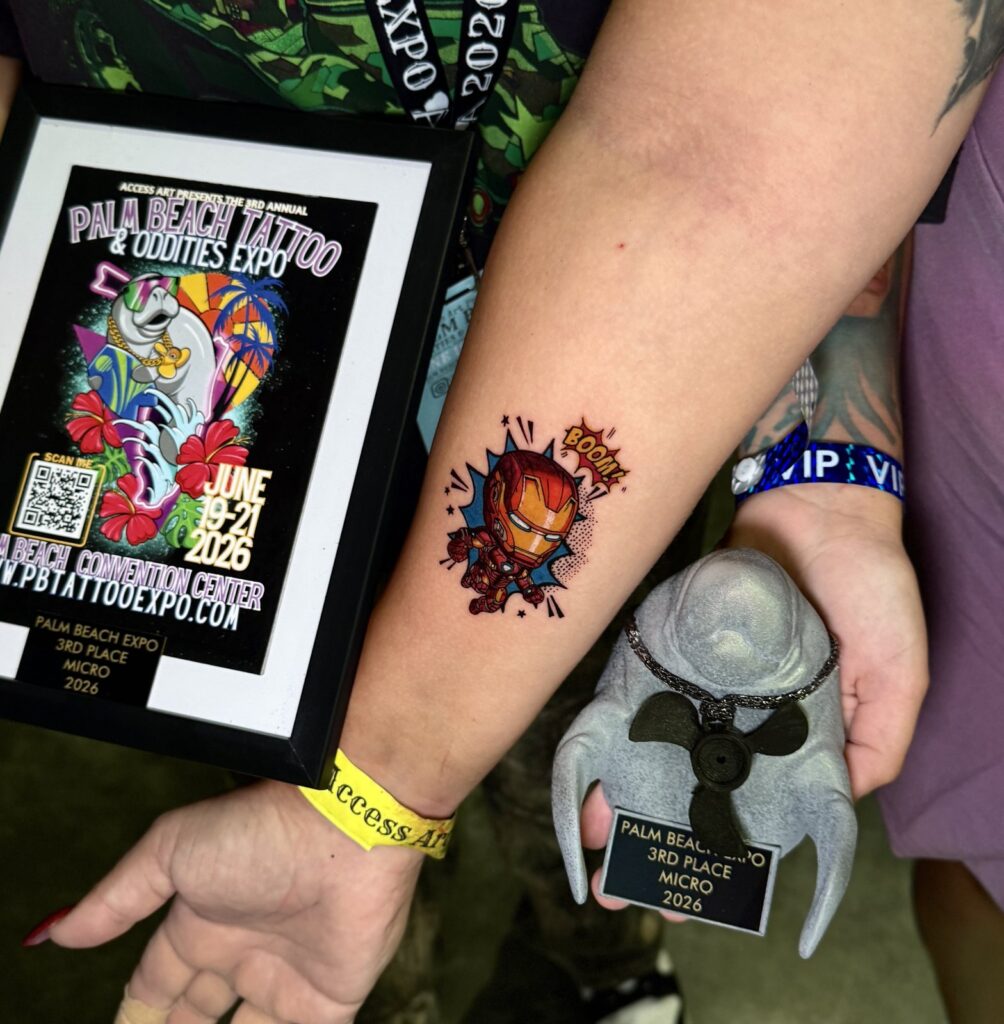
Winning an award in the Micro Tattoo category at the Palm Beach Tattoo & Oddities Expo was a very important moment in my career. At a tattoo convention, you are putting your work directly in front of other professionals in the industry and allowing it to be evaluated, so receiving an award meant much more to me than simply a trophy or placement. It showed me that the technical and artistic level of my work was being recognized externally as well, and that gave me a lot of motivation.
It also raised the standards I set for myself. I do not see success as a final destination — whenever I achieve something, one of my first thoughts is usually about how I can make the next piece even stronger. These kinds of achievements have helped me trust my work more and encouraged me to set bigger goals for myself on an international level.
You are sponsored by tattoo supply companies, which is a great achievement for any artist. How has this influenced your career?
Being supported by brands within the tattoo industry is an important milestone for me because it reflects the natural growth of my career. It is very meaningful when a company follows my work, appreciates my art, and wants to collaborate with me. Through these partnerships, I have the opportunity to become more familiar with new products and equipment used in the industry, and they also allow me to build stronger connections with brands, other artists, and the professional side of the tattoo world.
Sponsorships have also contributed to my professional visibility and social media presence. What I appreciate most is that both the artist and the brand can grow together while bringing value to each other’s work. I see these collaborations as meaningful professional relationships that support both the artistic and business side of my career, and I hope to work with even more international brands in the future.
Was there a turning point in your career that significantly improved your work, whether it was related to equipment, education, or technique?
One of the biggest turning points in my career was definitely when I began investing more seriously in advanced education. My initial training gave me a very strong foundation, and the advanced courses I completed afterward helped me build a much more technical understanding on top of it. My studies in realism, light and shadow, drawing, composition, stencil preparation, and technical application significantly improved the way I approach my work. At a certain point, instead of simply asking, “How is this tattoo done?”, I started analyzing why a particular technique works.
My understanding of equipment also made a major difference. I developed a much stronger understanding of the relationship between needle configuration, machine settings, voltage, hand speed, skin tension, depth, and the healing process. Once you reach that level of technical understanding, you are no longer leaving your work to chance — you know what you are doing, why you are doing it, and what kind of result you are trying to achieve. That level of technical control has been one of the biggest factors in improving the overall quality of my work.
What do you enjoy most about being a tattoo artist, and what still challenges you the most today?
What I enjoy most is knowing that something I create becomes a permanent part of another person’s life. That is one of the most powerful things that separates tattooing from many other forms of art — someone chooses to carry a piece of artwork that you designed and created on their body for the rest of their life. There is something very meaningful about that.
I also really enjoy the connection I build with my clients. An appointment can become much more than simply spending a few hours creating a tattoo; people often share important moments from their lives — stories about their families, losses, achievements, and personal experiences — and then, through art, you help make part of that story permanent. I think that is one of the things that makes tattooing so special.
The thing that challenges me most today is that I always want to improve. Even when I really love a piece, I can usually find something I want to do even better in the next tattoo — but I also see that as one of my strengths. I set high standards for myself, and I want the work I produce each year to be stronger than the work I created the year before. For me, growth is an essential part of my career.
What are your hobbies and interests outside of tattooing?
Outside of tattooing, I like to keep both creativity and an active lifestyle as important parts of my life. Photography, visual design, content creation, fitness, traveling, and discovering new places are some of the things I enjoy most. Photography also contributes directly to my work — it helps me develop a stronger understanding of composition, lighting, contrast, and how an image can be presented in the most powerful way.
Fitness gives me something completely different; it helps me feel better both physically and mentally and gives me balance outside of an intense work schedule. I also love traveling — new cities, different cultures, architecture, and the way people live constantly give me new visual ideas. I believe a good artist does not grow by only following their own industry: the more different things you see, experience, and explore, the more you have to bring back into your art.
Author: Lenka Banyarova, published on October 20th.