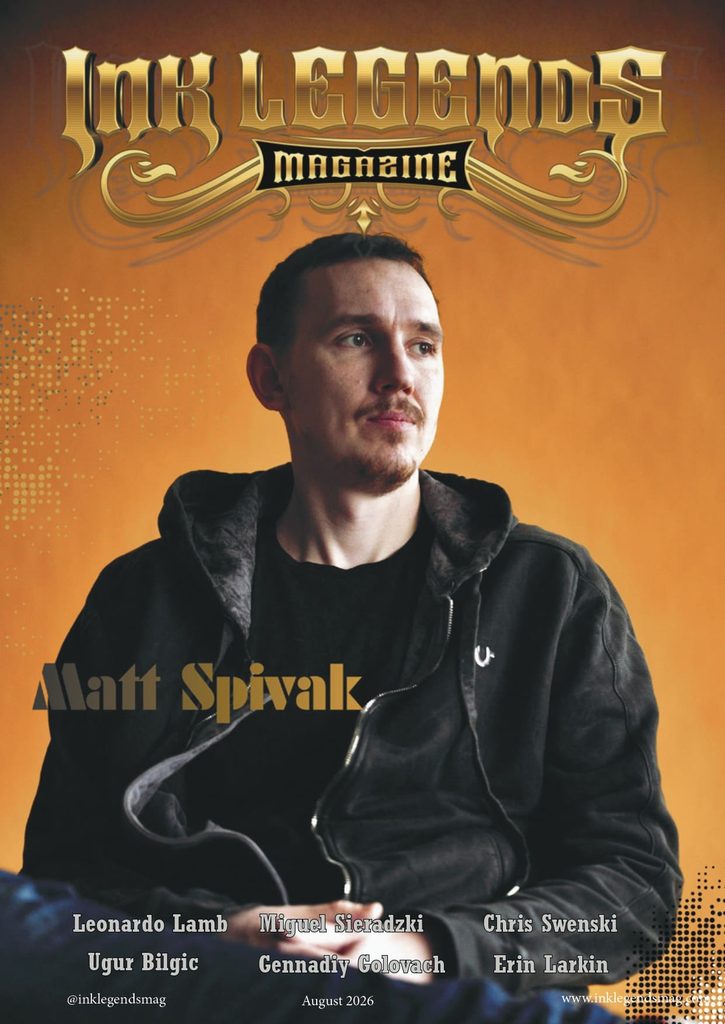
Can you please start by introducing yourself and telling us about your journey as a tattoo artist?
My name is Matvey Spivak. I was born and raised in Almaty, Kazakhstan. Right now I’m based in Buffalo, New York, but I like doing guest spots in different places whenever I get the chance.
I got into tattooing through airbrushing. Ever since I was a kid, I wanted a job where I could make money doing something I enjoy, not have a boss, and be able to travel. Somehow it all worked out.
I never went to art school, which I kind of wish I had, but at the same time it pushed me to figure everything out on my own. I’m always trying to learn, take seminars, and get better every day.
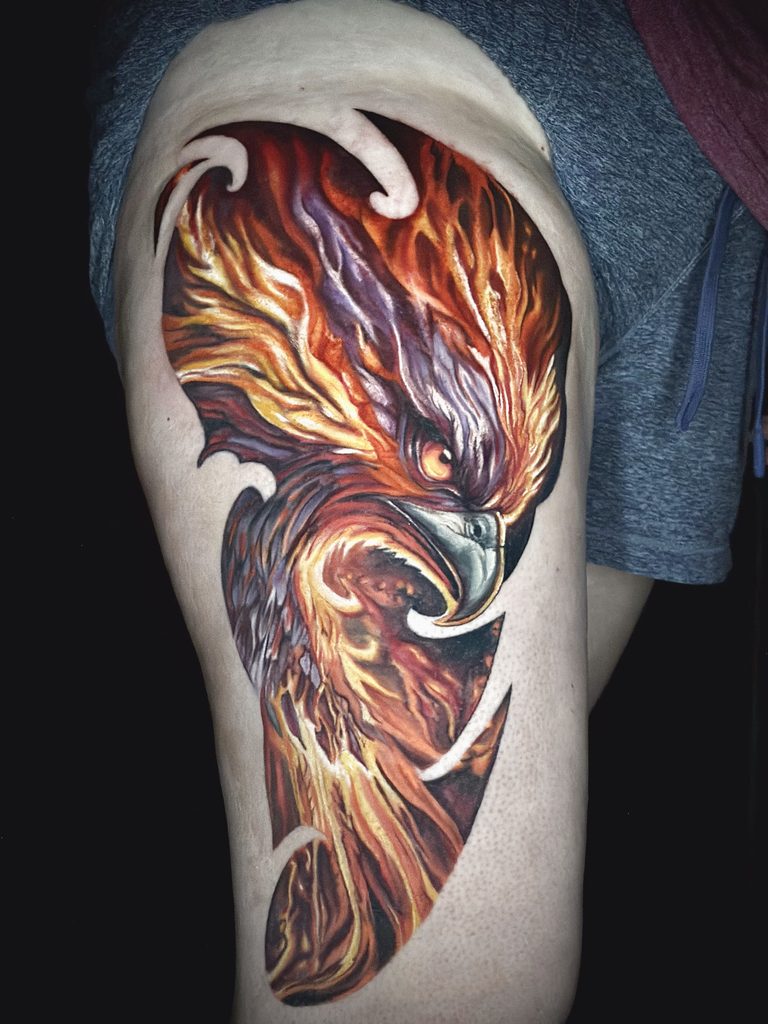
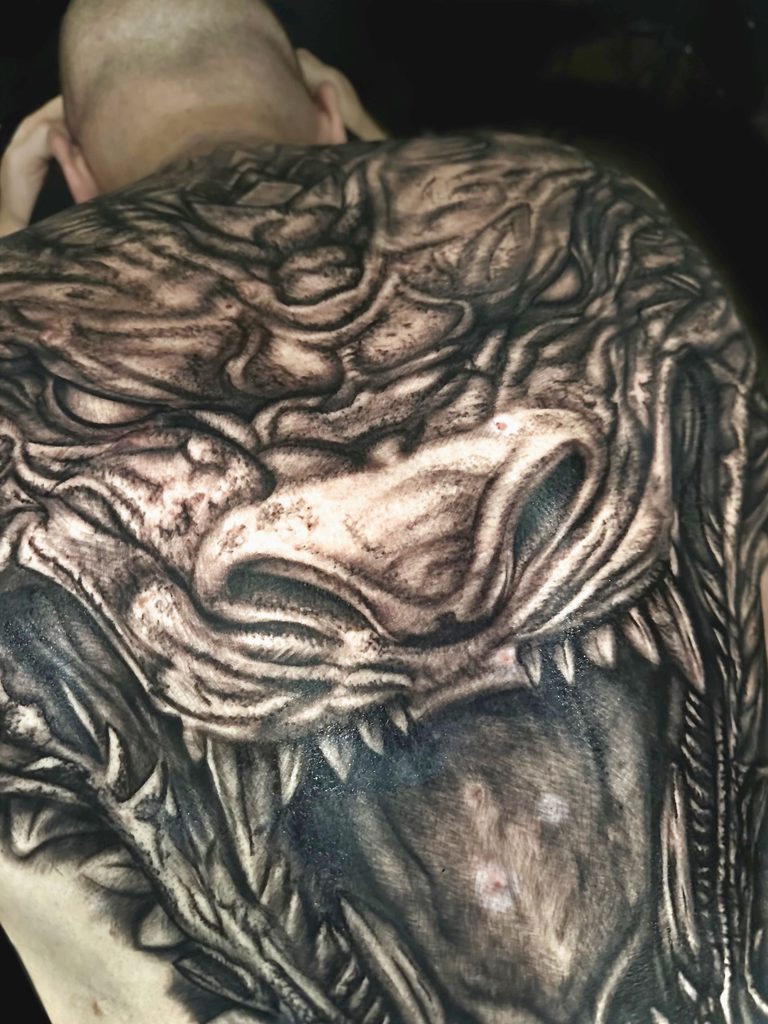
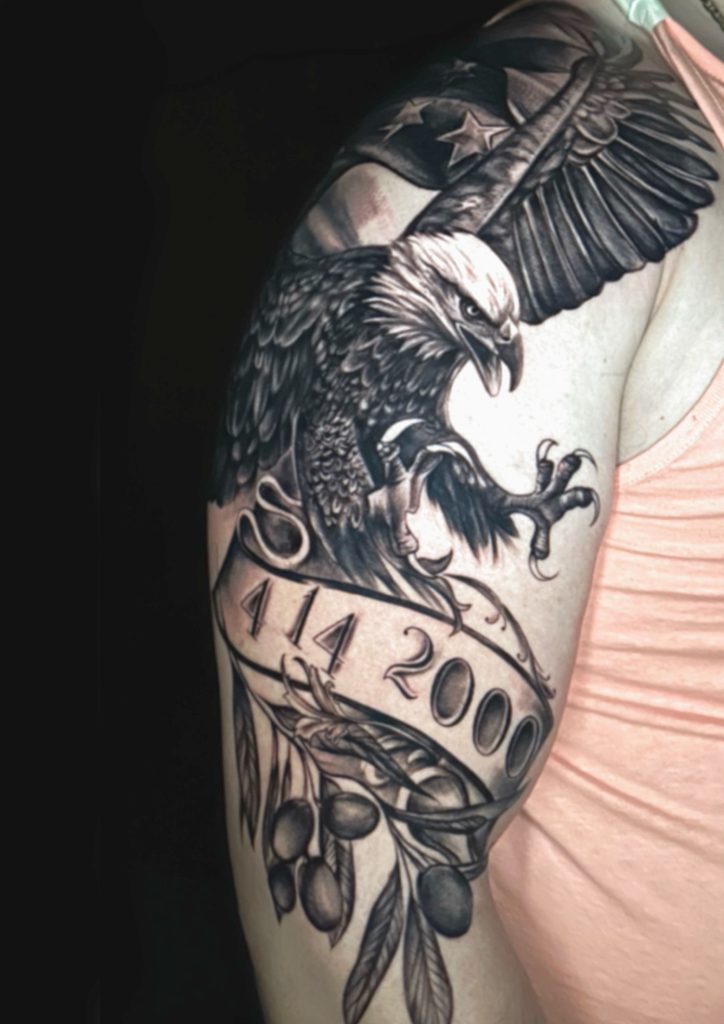
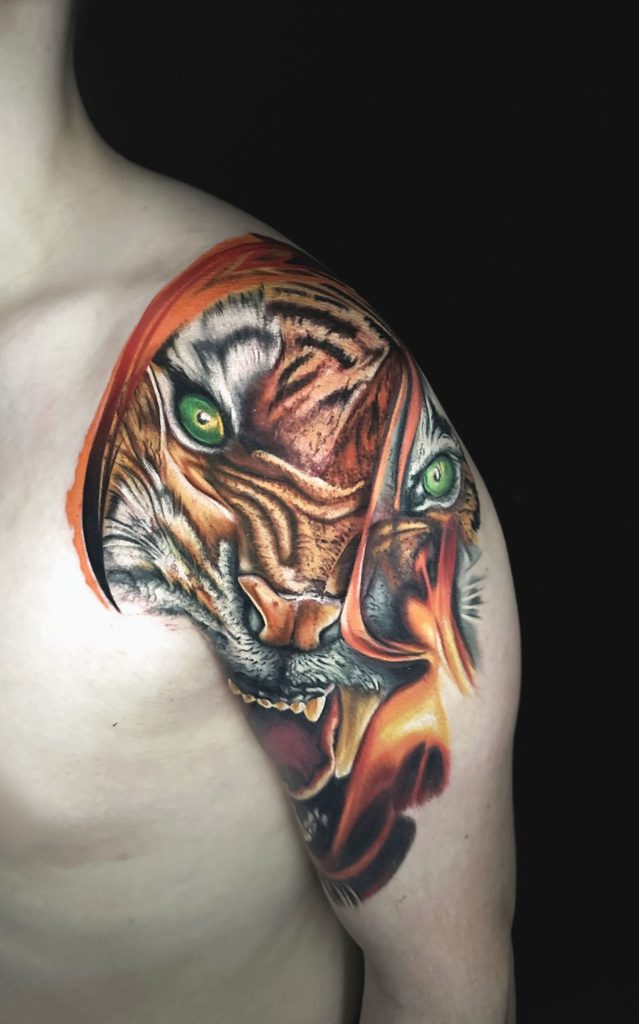
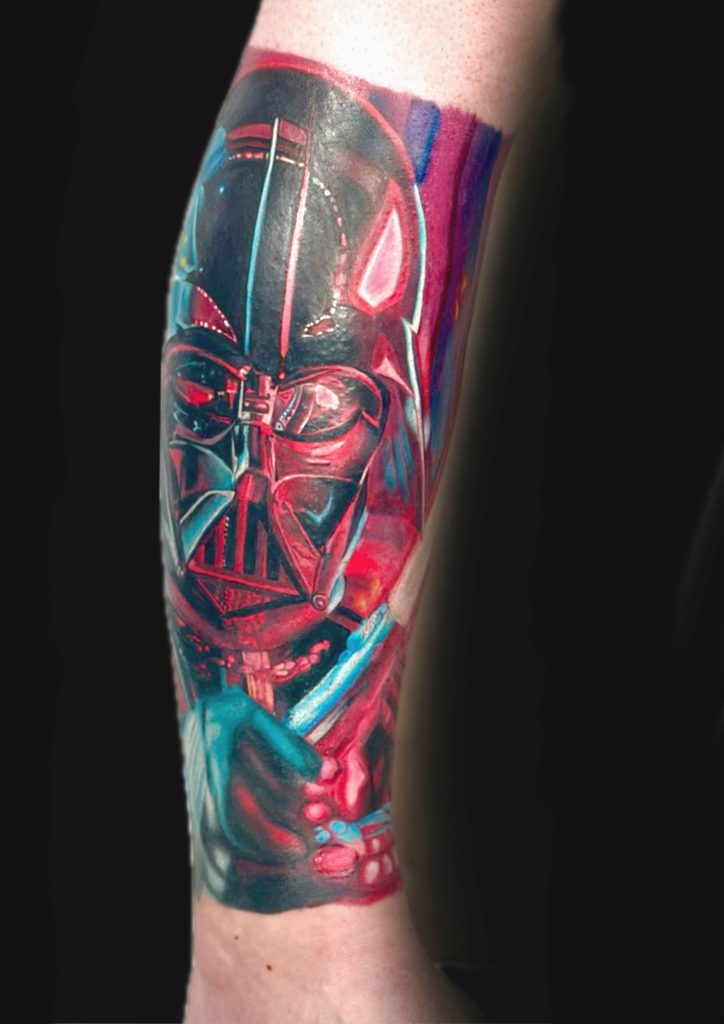
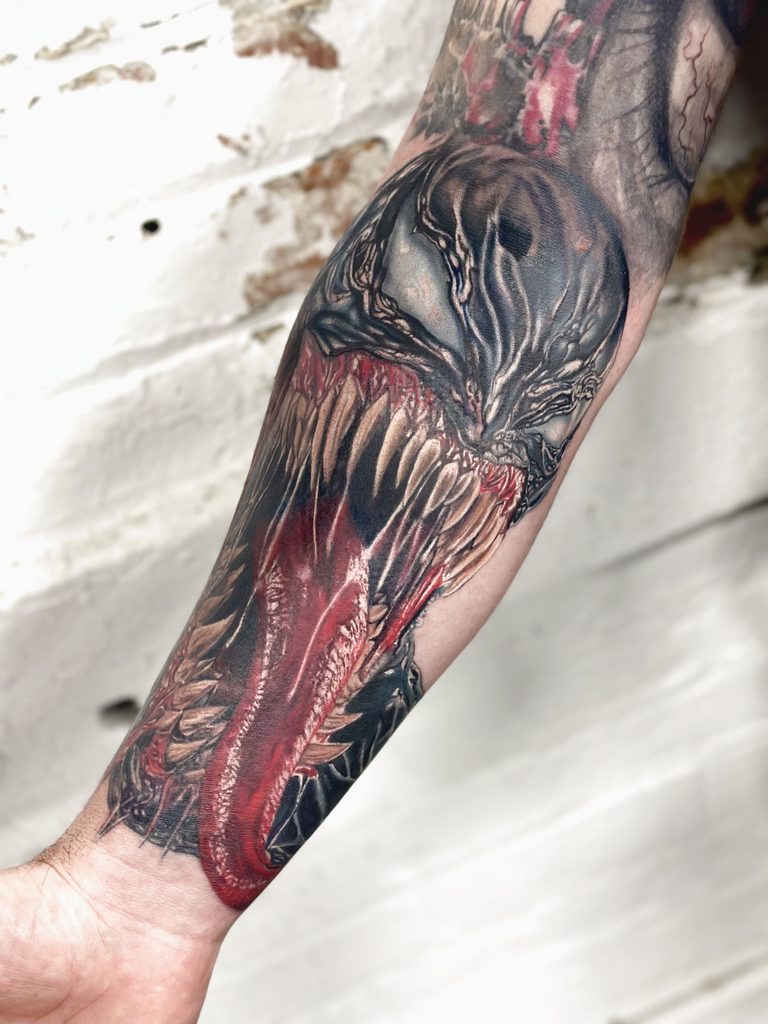
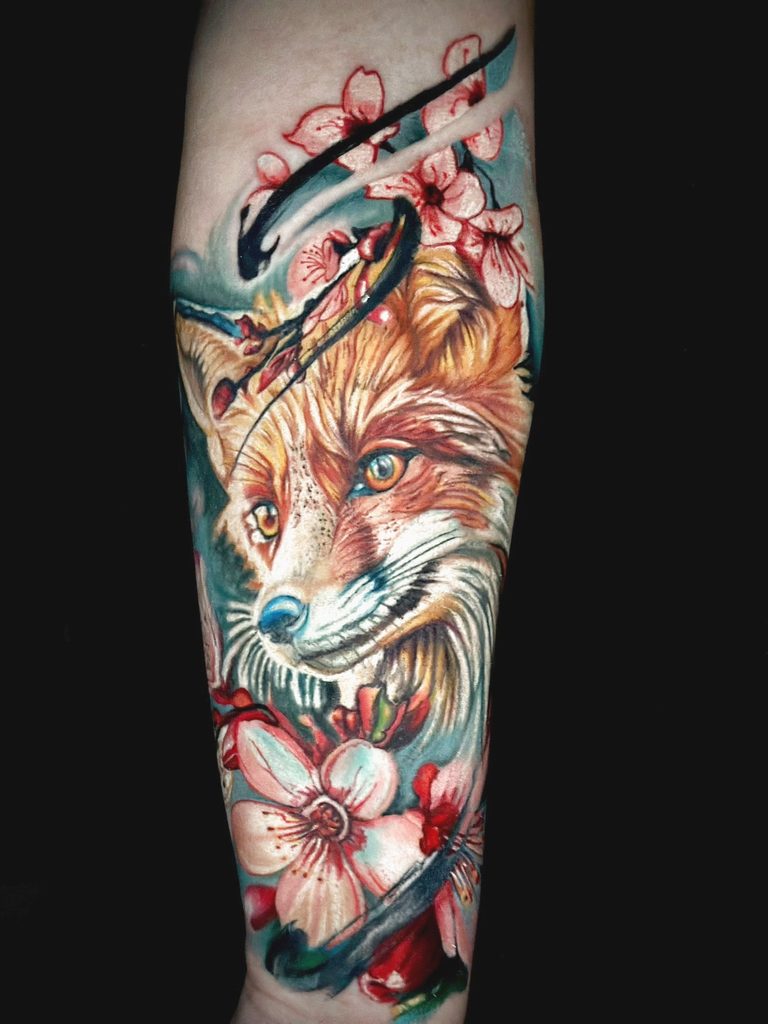
I’ve been tattooing for seven years now. I mainly do color realism and black and grey realism. Honestly, I enjoy both equally, so I don’t really have a favorite. I just like challenging myself and trying to make every tattoo better than the last one.
You specialize mainly in realism. What drew you to this style, and why did you choose it?
I think what really drew me to realism is that you can take a simple photograph and turn it into something that almost has more life than the original. A tattoo or a painting can have its own character and emotion. That’s what I find really interesting, and I kind of get lost in that process.
At the same time, I don’t think I’ve found my style yet. I’m still learning, still experimenting, and trying different things. I see realism as one step toward developing my own signature style. I think every artist goes through that process, and I’m still enjoying the journey of figuring out what that style is going to be.
What inspires your designs, and how do you approach the design process?
I don’t really have one specific thing that inspires me. It can be anything. Sometimes I’ll see something while walking down the street, sometimes it’s a movie, sometimes a painting, or just a random idea. I’ll see something and think, “Damn, that’s cool,” and then I get in the flow and the design just comes together. Sometimes it takes five minutes, sometimes it takes five hours.
Another big source of inspiration is my clients’ reactions. When they see the design and they’re like, “Man, that’s exactly what I wanted,” or even better than what they imagined—that really inspires me to keep creating something unique that nobody else can replicate.
As far as the design process goes, I don’t think I have a special formula. I just sit down, start sketching, move things around, erase stuff, add new ideas, and eventually it all comes together. Every design is different, so I don’t like putting myself in one specific process. Sometimes it flows right away, and sometimes you have to fight with it for a while. That’s just part of being an artist.
Your work is strong in both color and black and grey. Do you personally prefer one over the other, and how does your approach change when working in color compared to black and grey?
I honestly like doing both. I don’t really have a favorite. Color usually takes about twice as long as black and grey. With black and grey, it’s easier to set up—you don’t have to pour 20 different colors. You put out a few caps of black and grey wash, and you’re pretty much ready to go. The whole process is a little more straightforward.
Color takes more planning and more time, but when you finish a big color piece and you see all those colors pop, it’s a different kind of feeling. That’s something I really enjoy.
At the end of the day, both black and grey and color have their own beauty. Some designs are better in black and grey, and some really need color to bring them to life. It all depends on the project.
Was there any turning point in your career that significantly improved your work, whether it was related to equipment, education, or technique?
Yeah, I think there definitely was a turning point in my career. When I first started, I was working in a street shop, and after a couple of years I felt like I wasn’t really getting anywhere. I knew I had to change something.
So I started going to seminars and one-on-one masterclasses whenever I had the chance. And believe it or not, finding a really good teacher is an art in itself. There are a lot of amazing tattoo artists out there, but being able to explain why you do something and teach it to someone else is a completely different skill.
Then one day—I guess you could call it luck, but I don’t really think it was luck—I found Andrey Stepanov. He specializes in color realism, and I was lucky enough to get two days of one-on-one training with him. He completely changed the way I looked at tattooing and showed me a whole different approach.
I honestly never thought I’d be doing color realism the way I do today. That experience gave me a huge boost, a lot of motivation, and made me start focusing on bigger, more challenging projects.
It also made me realize how important it is to surround yourself with people who are better than you. Since then, whenever I get the opportunity to learn from someone whose work I respect, I take it. I think that’s one of the biggest reasons I’ve been able to keep improving.
Looking back at your career so far, which tattoo or project are you most proud of, and what makes it especially meaningful to you ?
I’m proud of every tattoo I’ve done—even the ones that didn’t turn out the way I wanted. Those are often the pieces that taught me the most. Every project has helped me grow as an artist.
At the same time, it’s hard to say I’m proud of one piece forever. A tattoo only feels like your best work for that moment in time. You finish it, go home, look at the photos, and think, “This is the best thing I’ve ever done.” Then you create the next piece, push yourself a little further, and suddenly you start seeing things you could have done better on the last one. Sometimes it only takes a few days before you notice little details you’d change.
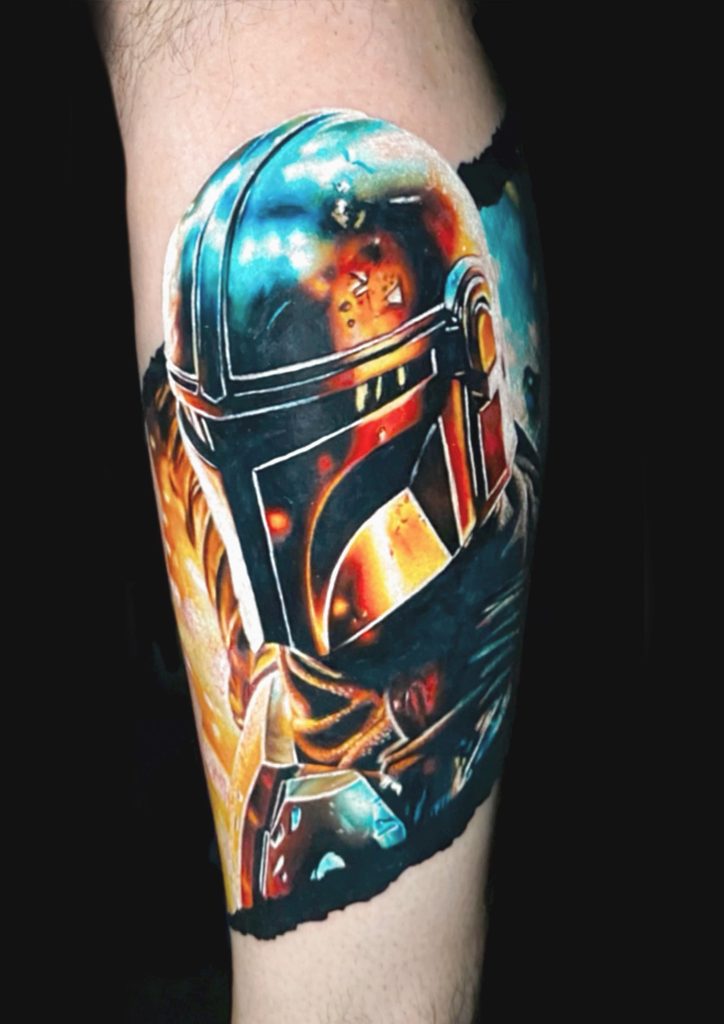
If I had to pick one, though, it would probably be the Mandalorian piece I did during a masterclass. That tattoo marked a turning point for me. It showed me what I was capable of when I stepped outside my comfort zone and learned from artists operating at a higher level.
Is there a subject or type of project you would like to explore more in the future?
I’d like to focus even more on large-scale projects—full sleeves, full leg sleeves, backs, and eventually whole body. Those are the projects where I feel I can do my best work because they give me the freedom to create something that flows naturally with the body instead of treating each tattoo as a separate piece.
What really excites me is thinking beyond a single area. If I’m tattooing someone’s back, I don’t want the design to stop there—I want it to flow into the shoulders, the arms, or wherever it makes sense. I love the idea of using the body as one complete canvas rather than a collection of individual tattoos.
Those are the kinds of projects I want to be known for in the future: large, cohesive pieces that feel like they were designed for the person, not just placed on them.
What do you enjoy most about being a tattoo artist, and what still challenges you the most today?
I think the biggest thing I enjoy is the freedom. Nobody’s really telling me what to do or how to do it. At the same time, I understand that if I don’t do the work, nothing is going to happen. So that freedom also comes with a lot of responsibility.
Another thing I really enjoy is seeing people’s reactions. I honestly believe tattoos can change someone’s life, not just their body. When somebody gets a big, well-done piece that really fits them, you can see their confidence change. The way they carry themselves is different. Seeing that is probably one of the most rewarding parts of the job. It feels like you’re leaving a mark on somebody’s life, not just on their skin.
As for the biggest challenge, I’d say it’s accepting my mistakes and my losses the same way I accept my wins. I think that’s something every artist has to learn. You can’t let the bad days get to you too much, and you can’t let the good days get to your head either. You just have to keep moving forward and keep getting better.
Do you have any special or exciting plans in the near future?
Yeah, I do. I think my plans are probably the same as a lot of other artists’. Just keep improving, keep learning, and do as many tattoos as I can. I don’t think there’s ever a point where you can say, “That’s it, I’m good enough.” There’s always something new to learn.
It’s kind of hard to talk about my plans, though. I have this thing where I feel like whenever you tell people your plans, they somehow don’t happen. So I’d rather keep them to myself for now.
But yeah, I definitely have some big goals for this year and for the future. Hopefully, little by little, you’ll be able to see them become reality.
What are your hobbies and interests outside of tattooing?
Honestly, tattooing takes up most of my time. But whenever I have a few days off, I like to get out into nature. I enjoy hiking, traveling, and exploring new places. I grew up around the mountains in Kazakhstan, so I guess that’s always stayed with me.
Since I was a kid, I’ve always been into sports. I spent most of my time boxing, kickboxing, and rock climbing. I was still kickboxing until about six months ago, when I broke my leg, so I’ve had to take a step back from it for now.
Other than that, I enjoy reading books, classic literature and biographies. I think it’s good to step away from tattooing sometimes and learn from completely different fields. I feel like everything you experience eventually finds its way back into your work somehow.